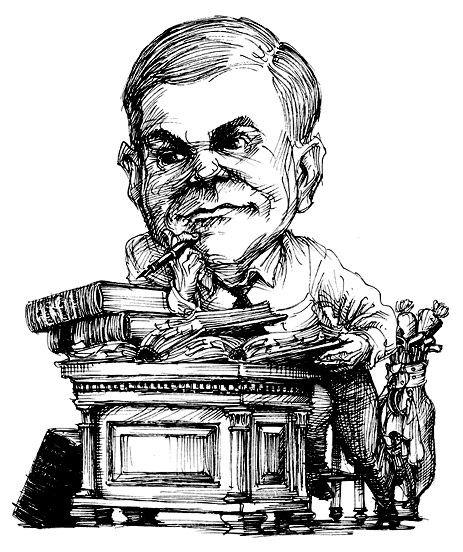
| | | Editing Is an Act of Friendship | To say that editing is an act of friendship is to recognize how it affirms both the writer’s effort and the reader’s experience. When you involve an editor—whether by choice or assignment—it means your writing is meant for more than just your own eyes. The work is being readied for a broader audience, and the editor’s job is to help you meet that audience with clarity and care. Every suggestion is a vote of confidence that your ideas are worth polishing, that your words deserve to shine. Editing isn’t meddling; it’s collaboration in the service of understanding.
Writers often see editorial marks as slights or scoldings. They’re not. A good editor is trying to make you look better—to show readers a version of you that’s sharper, more careful, and more credible than you probably seemed unedited. Those improvements make you appear more deliberate and exacting than you really were before someone stepped in to help. And if the edits happen to be poor ones—mistaken or misguided—be thankful for them and bide your time. You’ll get your turn. Eventually you’ll be the supervisor, the editor, the one holding the red pen.
What goes around comes around. Everybody—absolutely everybody—needs an editor. Humility isn’t just good manners; it’s self-defense. If you’re the one editing, don’t gloat over the mistakes you find. The writer whose work you’re improving could very likely make yours better, too, whether you know it or not. Editing, at its best, is friendship in action—a mutual exchange of care, judgment, and respect that keeps all of us honest, readable, and human. | We're back for our live online seminar series with Professor Garner!
Attend the most popular CLE seminar of all time. More than 250,000 people—including lawyers, judges, law clerks, and paralegals—have benefited since the early 1990s. You'll learn the keys to professional writing and acquire no-nonsense techniques to make your letters, memos, and briefs more powerful.
You'll also learn what doesn't work and why—know-how gathered through Professor Garner's unique experience in training lawyers at the country's top law firms, state and federal courts, government agencies, and Fortune 500 companies.
Professor Garner gives you the keys to make the most of your writing aptitude—in letters, memos, briefs, and more. The seminar covers five essential skills for persuasive writing: | - framing issues that arrest the readers' attention;
- cutting wordiness that wastes readers' time;
- using transitions deftly to make your argument flow;
- quoting authority more effectively; and
- tackling your writing projects more efficiently.
| He teaches dozens of techniques that make a big difference. Most important, he shows you what doesn't work—and why—and how to cultivate skillfulness.
Register to reserve your spot today.
FAQs and Policies for Advanced Legal Writing & Editing
Have you wanted to bring Professor Garner to teach your group? Contact us at info@lawprose.org for more information about in-house seminars.
If you buy using links on this page, we may receive affiliate commission, which supports our work. | | | | Are you litigating a tricky question of statutory interpretation? Consider Lexegesis, our allied consulting group. | | | | | | P.O. Box 195989, Dallas, Texas 75219
Tel: 214-691-8588 | | | | info@lawprose.org
Copyright © 2026 Bryan A. Garner. All rights reserved. We have taken some care to select our lists, but if you do not wish to continue receiving our communications, please choose the unsubscribe link or reply and type "Remove" in the subject line. Thank you. | | | | | | | | |